
Electrify Your Lawn Care
Electric lawn equipment has seen drastic improvements in cost, motor efficiency and battery power. Learn how brushless motors, proper battery care, and smart purchasing decisions can simplify your lawn care routine.
Electric lawn equipment has seen drastic improvements in cost, motor efficiency and battery power in recent years. From hedge and string trimmers to leaf blowers, chain saws, and push and riding mowers, there are lots of options for electric lawn equipment.
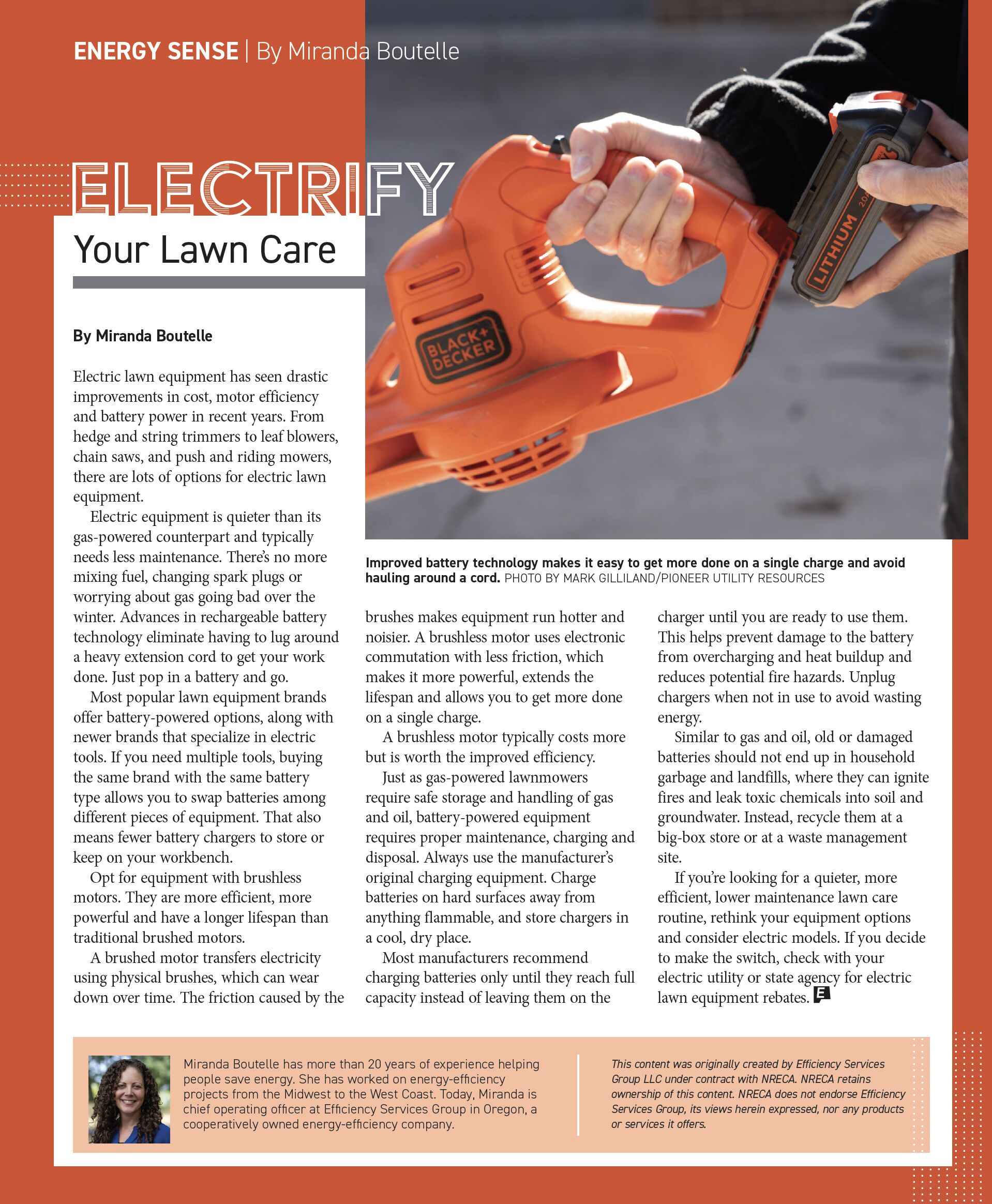
Electric equipment is quieter than its gas-powered counterpart and typically needs less maintenance. There's no more mixing fuel, changing spark plugs or worrying about gas going bad over the winter. Advances in rechargeable battery technology eliminate having to lug around a heavy extension cord to get your work done. Just pop in a battery and go.
Most popular lawn equipment brands offer battery-powered options, along with newer brands that specialize in electric tools. If you need multiple tools, buying the same brand with the same battery type allows you to swap batteries among different pieces of equipment. That also means fewer battery chargers to store or keep on your workbench.
Opt for equipment with brushless motors. They are more efficient, more powerful and have a longer lifespan than traditional brushed motors.
A brushed motor transfers electricity using physical brushes, which can wear down over time. The friction caused by the brushes makes equipment run hotter and noisier. A brushless motor uses electronic commutation with less friction, which makes it more powerful, extends the lifespan and allows you to get more done on a single charge.
A brushless motor typically costs more but is worth the improved efficiency.
Just as gas-powered lawnmowers require safe storage and handling of gas and oil, battery-powered equipment requires proper maintenance, charging and disposal. Always use the manufacturer's original charging equipment. Charge batteries on hard surfaces away from anything flammable, and store chargers in a cool, dry place.
Most manufacturers recommend charging batteries only until they reach full capacity instead of leaving them on the charger until you are ready to use them. This helps prevent damage to the battery from overcharging and heat buildup and reduces potential fire hazards. Unplug chargers when not in use to avoid wasting energy.
Similar to gas and oil, old or damaged batteries should not end up in household garbage and landfills, where they can ignite fires and leak toxic chemicals into soil and groundwater. Instead, recycle them at a big-box store or at a waste management site.
If you're looking for a quieter, more efficient, lower maintenance lawn care routine, rethink your equipment options and consider electric models. If you decide to make the switch, check with your electric utility or state agency for electric lawn equipment rebates.