
At the Flip of a Switch
When you flip on a power switch, a complex, coordinated system works to bring electricity from across the state to your fingertips
Most of us do not think much about electricity until it is not there.
When we plug in a phone charger, turn on an air conditioner, start a load of laundry or run a well pump, we expect power to simply be ready. But behind that moment is a large, carefully maintained system moving electricity from where it is generated to where it is needed.
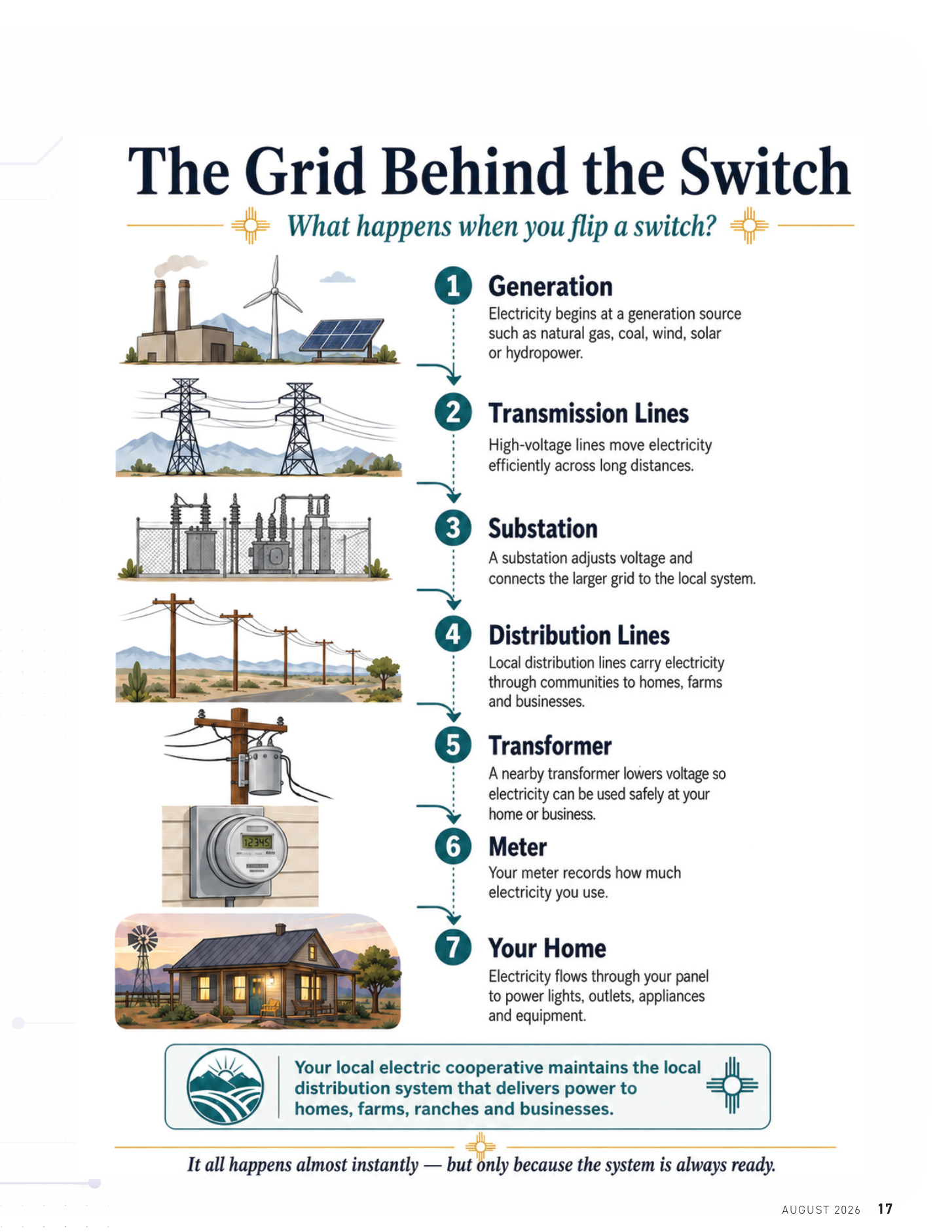
That journey begins at a power generation source. Electricity may be produced using natural gas, coal, wind, solar, water or other resources connected to the larger electric grid.
Once generated, electricity often travels long distances through high-voltage transmission lines. These large lines are designed to move power efficiently across regions, helping connect generation resources to the communities that need them.
Before electricity can safely serve homes and businesses, it must pass through a substation. Substations are a key link between the high-voltage transmission system and the local distribution system. At the substation, voltage is adjusted so electricity can move onto the lines that serve neighborhoods, farms, ranches, schools, water systems and small businesses.
From the substation, electricity travels along distribution lines. These are the lines most of us see along roads, across fields and through rural communities. Distribution lines carry power closer to the places where people live and work.
Near your home or business, electricity passes through a nearby transformer. That transformer lowers the voltage so electricity can be used safely inside the building.
From the transformer, electricity travels through a service line to your electric meter. The meter measures how much electricity flows into the electrical panel, outlets, lights, appliances and equipment that help keep daily life moving.
All of this happens almost instantly when you flip a switch. But it only feels simple because the system is planned, built and maintained every day.
Electric cooperatives play a critical role in this system. While generation and transmission cover large regions, your local co-op maintains the distribution lines, poles, transformers, meters and other equipment that deliver electricity directly to members.
That work never really stops. Co-op crews inspect equipment, replace aging poles, maintain substations, upgrade lines, clear rights of way and respond when storms, wind, lightning, vehicles, wildlife or equipment failures cause outages.
So, the next time you turn on a light, remember that it is the final step in a much larger journey. Behind that switch is a network of people, equipment and planning working together to keep electricity safe, reliable and ready when you need it.