
Not independently reported by Enchantment editorial staff.
Growing an art destination, not just for tourists
LAS VEGAS, NM - It started with a vision of creating an art destination—not just for tourists but also for the artists themselves. That vision was bolstered financially by the state’s Creative Industries Division, part of the Economic Development Department, which gave a grant of $100,000 to MainStreet de Las Vegas.
MainStreet is working with the Las Vegas Arts Council and other nonprofits, with the aim of increasing opportunities for what is called the “creative economy,” defined by the state broadly to include everything from mixing drinks to building in adobe. If a person creates something, and gets paid for it, they are taking part in the creative economy.
What were once commonplace skills held by most adults—including carpentry and building, sewing, knitting, canning, and other hand crafts—have become niche or specialized skills in the modern era. That represents an opportunity.
“Creativity is more than art, it’s an economic powerhouse. In New Mexico, our creative economy extends far beyond artists and performers. It fuels museums, digital media, software design, architecture, gaming, publishing, and more,” says the Creative Industries Division’s website, adding, “The intersection of culture, technology, and innovation presents immense opportunities for businesses, entrepreneurs, and communities to thrive.”
The state makes grants like the one received by MainStreet de Las Vegas, but also grants that fund “creatives” directly. That ethos of directly funding musicians, artists and others in the implementation of the grant helps spark interest among locals.
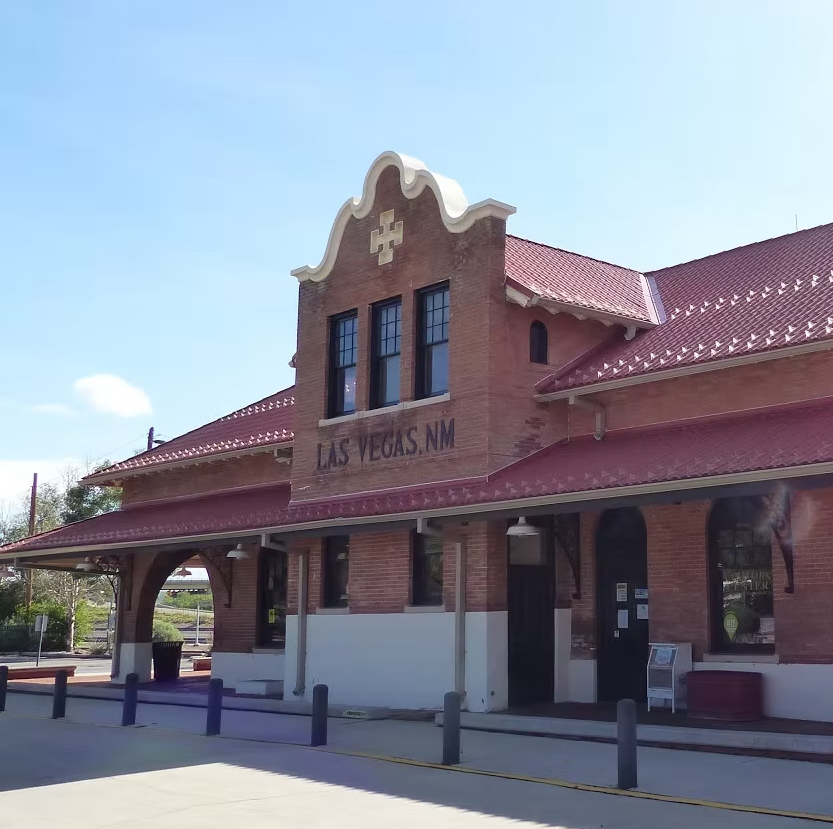
Meanwhile, MainStreet de Las Vegas has an ongoing effort to revitalize the historic Railroad District, which has recently seen infrastructure improvements like sidewalks, in partnership with the City of Las Vegas.
A program of the New Mexico Economic Development Department, New Mexico MainStreet helps affiliated local organizations create an economically viable business environment while preserving cultural and historic resources.
Las Vegas is home to several historic districts, and about 900 historic buildings, many in disrepair, even in commercial areas. Part of the grant is being used to improve facades in these areas.
David Rogers administers the Creative Economy grant for MainStreet de Las Vegas Arts and Cultural District, and is the Las Vegas Arts Council's current Board president.
“Creative industries include architecture, acting, landscaping, musical performance, anything creative, really,” Rogers says, adding that MainStreet de Las Vegas is driving in two lanes simultaneously: reviving the Railroad District and promoting the creative economy. He points to a recent event in which a multimedia presentation was projected onto a wall across from the train depot for an audience of about a hundred people. Until recently, the space had been a derelict building; now the wall exposed by its demolition is being painted with Las Vegas’ newest mural.
Rogers has been instrumental in the effort from the beginning, as one of a group of people who sat down together and fleshed out a vision for a thriving arts scene in Las Vegas, with artists gathering here. Organizers want to look beyond simply trying to attract more tourists into the area.
“MainStreet got this grant,” said Louie Trujillo, formerly Las Vegas mayor and currently serving on MainStreet’s board, “to promote local art and inspire local artists, which includes every type of art possible. Anything from cottage industries, music, paintings, carvings—and we have this resurgence of Railroad Avenue.”
Railroad Ave. is the location of the city’s visitors center and historic railroad depot, as well as the Castañeda Hotel and its newly reopened restaurant and bar; Coffee, Tea & Empathy, a locally owned coffeeshop; and an antiques shop, among other businesses.
It will be the location of the People’s Festival of Art & Culture, a new event Sept. 26 that builds on a nearly half-century tradition of the People’s Faire, an art festival that has been held for many years in the park around Carnegie Library.
The new venue allows for a bigger event, and that’s exactly what organizers have in mind: more booths, more food vendors, more music, nonprofit booths, workshops and more in a street fair setting. In addition to expanding the event, organizers are heavily promoting it as well, leveraging the grant and lodgers’ tax funding to promote the event statewide in New Mexico and Colorado, along with west Texas.
Elmo Baca has been one of the people leading the charge in improvements to old buildings around Las Vegas for decades. He restored the building housing Indigo Theater, showing first-run movies in a “boutique” theater environment. He points to difficulties the city is still facing after the devastating fires and flooding here a few years ago.
“The phenomenal marketing capacity of the internet” can help artists and other creatives use their skills and talents to become entrepreneurs, Baca said, adding “what is deemed to be creative nowadays is a much broader spectrum of activity.”
Future plans include workshops in October, including marketing, promoting, pricing and selling work; time management and career development; record keeping, and legal and tax obligations; funding, grant writing, and portfolio development; and using technology and internet.
A report this year in the Daily Lobo referencing a UNM study of Albuquerque’s creative economy says there are “17,680 workers directly employed by 2,457 creative businesses generating $1.1 billion in economic output in 2024 [in Albuquerque].”
The Daily Lobo goes on to say that the lion’s share of that economic activity is among the category of “artisans,” with about 5,000 workers. Close behind that were media, design, and retail, which each had about 3,000 workers.
The CID’s website says that as of 2024, New Mexico’s creative industries amounted to about $6 billion in annual economic activity and $1.6 billion in taxable annual wages; it projects 118% growth by 2030.
This sponsored story is a paid placement from MainStreet de Las Vegas.